
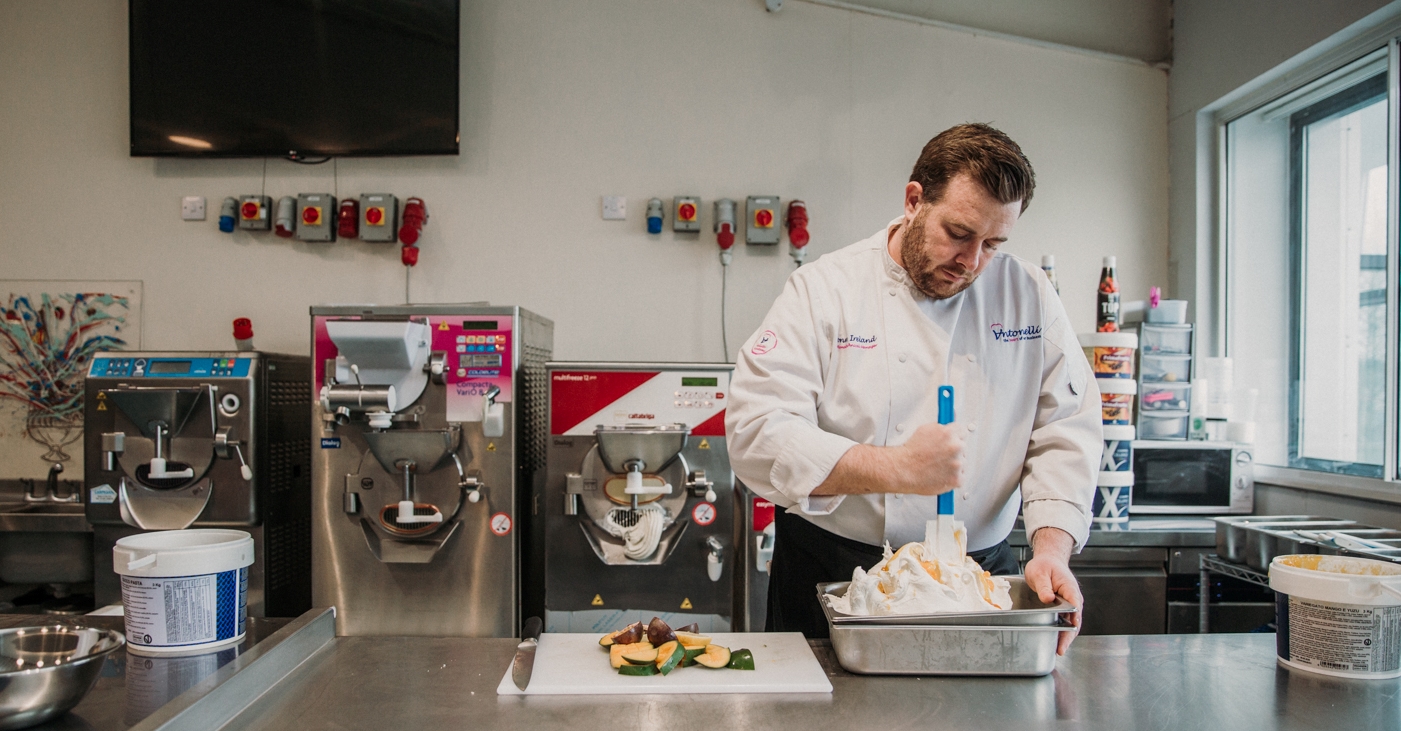
Following the massive surge in plant-based marketed food a few years ago, including the astronomical uptake in those participating in the very famous ‘Veganuary’, in recent times we have seen this quieten slightly.
The Vegan Society has estimated that around 700,000 people have adopted a plant-based diet in the UK, this marks around 1-2% of the total population. However, according to data released January 2023 (during Veganuary) saw chilled meat alternatives fall by 16.8% compared to January 2022, whilst plant-based alternatives saw small growth of 0.9%.
There are many reasons why people that have or want to join the plant-based movement have fallen off the wagon. The Vegan Society has placed some blame on the high cost of meat free alternatives, and we know ourselves within the ice cream industry that non-dairy alternatives cost significantly more than traditional dairy milk.
Despite this, both Antonelli and many others in the industry highly recommend plant-based become a consideration for your cabinet, and here’s why…
Why add plant-based to your cabinet?
If you take a close look at the coffee industry, you can see that more and more people are drinking their coffees with non-dairy alternatives. Now, this is being done various reasons, and we can all agree that dairy-free alternatives to milk have been marketed really well.
First off, non-dairy alternatives are lower in saturated fat and cholesterol than dairy milk, giving the impression that it will be a healthier product to consumer (although I’m not sure dairy farmers would agree).
Secondly, these alternatives are obviously lactose free. And with more and more people declaring themselves lactose intolerant (around 1 in every 10 older children and adults according to research from BUPA), offering these lactose free products could prove to be very beneficial.
Last but certainly not least there are, of course, ethical considerations for those choosing a dairy-free alternative. Although data is showing that this is at a lower level than it was three years ago when veganism was on the rise.
Before we get into the nitty gritty of making your ice cream, we want to note something.
You may have noticed that we haven’t referred to the term vegan in relation to ice cream products, in fact, this term is something that many across the food industry are actively avoiding. But why?
This is, in large part, due to the negative connotations associated with the word vegan. But whether this view is warranted or not, when it comes to marketing your product, the term ‘plant-based’ will prove to be a much more effective description.
So, how can you offer great alternative products for those opting for a plant-based lifestyle?
Making your plant-based ice cream
Your first consideration for any plant-based ice cream recipe is to find a good source of fat.
In our experience the best form of plant-based fat is deodorised coconut fat; this has a melting point of 24°c, whilst with dairy fats this is 40°c. What this means is that our coconut fat will warm up on the palette quicker than dairy fat, giving that much sought-after creamy tones (although without the dairy creamy flavour unfortunately).
Our second consideration is to identify an alternative source of plant-based protein.
We have spent many years experimenting with a lot of plant-based proteins to uncover the best options. There are a number of great options out there, but all come with some downfalls…
Pea protein
Pea protein is super effective, but will sadly make your ice cream tase like mushy peas (great for an April Fools Day prank but not exactly a contender for our everyday cabinet).
Soy protein
Again, soy protein works quite well, but unfortunately you can only dose up to 0.2% of your total recipe before the flavour becomes noticeable, this is not enough protein to achieve the ice cream structure our consumers are looking for. And of course, soy is an allergen that we may want to avoid.
Hemp protein
Hemp protein will bind very well with fat, but tastes rather unpleasant in our opinion.
Rice protein
Rice protein has the opposite issue, it has quite low binding properties but the flavour is rather good.
Often what we find with companies that make ready bag products (that are, of course, plant-based), is that they are typically a mix of soy and rice inside to achieve both the appropriate binding properties as well as tasty flavour.
Now we use fat and protein to bind together and trap water (and stop it from forming into ice), but there are other ways to trap out water that don’t involve fat or protein and that is to use starch.
We have found that potato starch at a very low dosage (around 0.01%) will trap loose water very well whilst also emulsifying, this not only gives you a good amount of air in your ice cream (a crucial component) but also warmth for the palette.
Other alternatives
Our options above are of course for when you want to make a really great plant-based ice cream. But we genuinely believe that making a fantastic sorbet can draw in the crowds just as much! By using the right recipe of fruit stabiliser and sugar you can achieve a really creamy sorbet will give the impression of an ice cream (without the dairy)!
Will you be incorporating plant-based alternative products in your cabinet this summer? If you’d like any advice, guidance or recipe ideas, please don’t hesitate to contact the Antonelli team.